
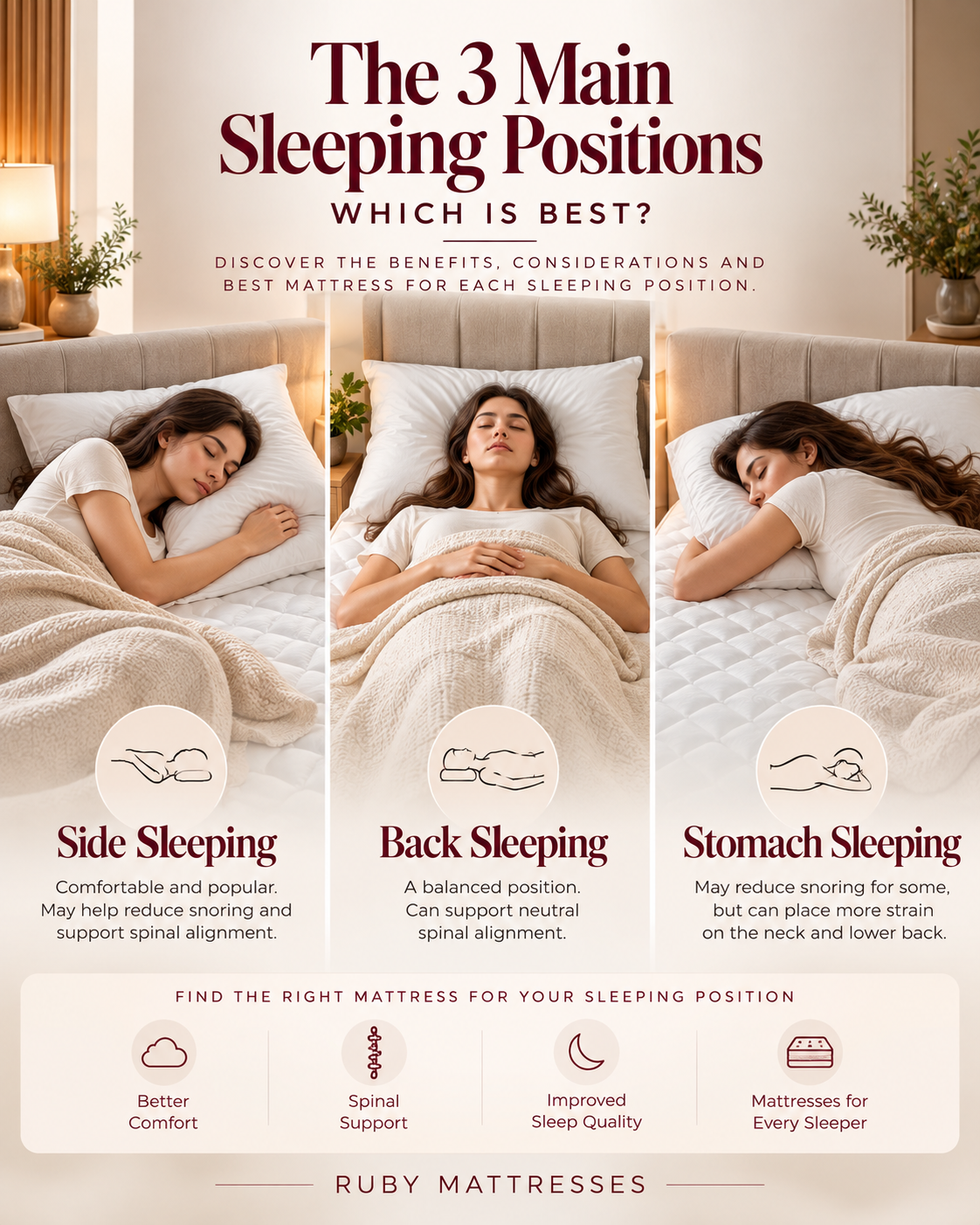
Have you ever wondered whether sleeping on your side, back or stomach is better for your health and comfort? Your sleeping position can influence spinal alignment, pressure distribution, breathing and how rested you feel in the morning.
Although everyone has different sleeping habits, understanding the three main sleeping positions can help you make more informed choices about your sleep environment.
At Ruby Mattresses, we believe that better sleep starts with the right combination of sleeping posture, mattress support and personal comfort.
In this guide, we explain the advantages and disadvantages of side, back and stomach sleeping, explore which position may be best for different needs, and explain how to choose a suitable mattress.
What Are the 3 Main Sleeping Positions?
Most people sleep primarily in one of three positions:
- Side sleeping: Resting on the left or right side of the body.
- Back sleeping: Lying face-up with the back against the mattress.
- Stomach sleeping: Lying face-down with the front of the body against the mattress.
Some sleepers remain in one position for much of the night, while others change positions frequently. People who move between multiple positions are often called combination sleepers.
1. Side Sleeping – A Popular Choice for Comfort
Side sleeping is one of the most common sleeping positions. It involves resting on either the left or right side, with the shoulders and hips in contact with the mattress.
For many adults, side sleeping offers a comfortable balance between body support and breathing. It can be particularly helpful for people who snore or experience certain types of sleep-disordered breathing, although it is not a substitute for medical treatment.
Benefits of Side Sleeping
May Help Reduce Snoring
Sleeping on your side may help keep the upper airway more open than sleeping on your back, which can reduce snoring for some people.
Can Support Comfortable Spinal Alignment
When the mattress provides suitable cushioning and support, side sleeping can help maintain a relatively neutral spinal position.
Often Recommended During Pregnancy
Side sleeping is commonly recommended during later pregnancy. Pregnant individuals should follow guidance from their maternity care provider about suitable sleep positions.
May Help With Nighttime Acid Reflux
Left-side sleeping may reduce nighttime reflux symptoms for some people compared with right-side or back sleeping.
Disadvantages of Side Sleeping
Side sleeping can place concentrated pressure on the shoulders and hips, particularly when the mattress is too firm for the sleeper.
- Shoulder discomfort from excessive pressure.
- Hip pressure on an unsuitable mattress.
- Neck discomfort from incorrect pillow height.
- Arm numbness when sleeping directly on an arm.
What Mattress Is Best for Side Sleepers?
Side sleepers often benefit from a mattress that cushions the shoulders and hips while keeping the body appropriately supported.
A medium soft to medium firm mattress is a useful starting point for many side sleepers, although body weight and personal preference matter.
Recommended Mattress Materials for Side Sleepers
- Memory Foam: Contouring comfort around shoulders and hips.
- Latex: Responsive cushioning with a buoyant feel.
- Pocket Spring: Support combined with suitable comfort layers.
- Pillow Top: Additional surface cushioning on selected models.
Explore our memory foam mattresses and latex mattresses for different cushioning options.
Side Sleeping Pillow Tips
Choose a pillow that fills the space between your shoulder and head, helping keep your neck aligned with your spine.
Extra Comfort Tip for Side Sleepers
Placing a pillow between your knees may help maintain a comfortable hip and lower-back position.
2. Back Sleeping – A Balanced Position for Spinal Support
Back sleeping involves lying face-up with your head, shoulders, back and hips supported by the mattress.
For some people, back sleeping provides a comfortable position for distributing body weight across the sleeping surface. However, it is not ideal for everyone, particularly people with certain breathing conditions.
Benefits of Back Sleeping
Can Support Neutral Spinal Alignment
With suitable mattress and pillow support, back sleeping can help maintain a neutral position through the neck and spine.
Distributes Body Weight Across the Mattress
Back sleeping generally spreads body weight across a larger surface area than side sleeping, which may reduce concentrated pressure on the shoulders and hips.
May Reduce Pressure on One Shoulder
Because neither shoulder carries the body's full side-lying pressure, some sleepers with shoulder discomfort may find back sleeping more comfortable.
Disadvantages of Back Sleeping
Back sleeping can increase snoring and obstructive breathing events in some individuals. It may also feel uncomfortable when the mattress allows excessive sinking around the hips or lower back.
- May worsen snoring.
- Can worsen positional obstructive sleep apnea.
- May cause discomfort with unsuitable mattress support.
- May not be recommended during later pregnancy.
What Mattress Is Best for Back Sleepers?
Many back sleepers prefer a medium firm mattress that combines cushioning with stable support.
The mattress should allow comfortable body positioning without excessive sinking around the hips.
Recommended Mattress Materials for Back Sleepers
- Pocket Spring: Responsive support and stability.
- Memory Foam: Contouring comfort with suitable underlying support.
- Latex: Resilient cushioning and responsive support.
- Hybrid Constructions: A combination of spring and foam layers.
Explore our pocket spring mattresses for responsive support options.
Back Sleeping Pillow Tips
Choose a pillow that supports the natural curve of your neck without pushing your head too far forward.
Extra Comfort Tip for Back Sleepers
A small pillow beneath the knees may reduce lower-back strain for some sleepers.
3. Stomach Sleeping – Is It Good or Bad?
Stomach sleeping involves lying face-down with the chest and abdomen resting against the mattress.
Although some people naturally prefer this position, it may place additional strain on the neck and lower back.
This happens because the head is usually turned to one side, while the lower back may arch depending on the mattress and body position.
Possible Benefits of Stomach Sleeping
May Reduce Snoring for Some People
Sleeping face-down may reduce snoring in certain individuals compared with back sleeping. However, it is not a recommended standalone treatment for sleep apnea.
May Feel Familiar and Comfortable
Some people find stomach sleeping comfortable because it is their long-established sleeping habit.
Disadvantages of Stomach Sleeping
- Can place strain on the neck from prolonged head rotation.
- May increase lower-back arching.
- Can create uncomfortable pressure on the abdomen and chest.
- May contribute to stiffness in some sleepers.
What Mattress Is Best for Stomach Sleepers?
Stomach sleepers often prefer a medium firm to firm mattress that limits excessive sinking around the midsection.
A mattress that is too soft may allow the hips and abdomen to sink more deeply than the upper body.
Recommended Mattress Materials for Stomach Sleepers
- Supportive Foam: Stable sleeping surface.
- Pocket Spring: Responsive support with appropriate firmness.
- Firm Latex: Resilient cushioning with reduced sinkage.
Browse our mattress collection to compare available support and firmness options.
Stomach Sleeping Pillow Tips
A very low pillow, or no head pillow where comfortable, may help reduce neck extension. Avoid forcing your neck into an uncomfortable position.
Extra Comfort Tip for Stomach Sleepers
Some stomach sleepers find a thin pillow beneath the pelvis more comfortable. If this position causes persistent pain, consider changing your sleeping posture and seeking professional advice.
Side vs Back vs Stomach Sleeping: Comparison
The following table summarizes the general characteristics of the three main sleeping positions.
| Factor | Side Sleeping | Back Sleeping | Stomach Sleeping |
|---|---|---|---|
| Spinal alignment | Can be neutral with proper support | Can be neutral with proper support | May increase neck and lower-back strain |
| Shoulder and hip pressure | May be higher | Generally more distributed | Varies by mattress and body position |
| Snoring | May help reduce snoring | May worsen snoring | May reduce snoring for some |
| Common firmness starting point | Medium soft to medium firm | Medium firm | Medium firm to firm |
| Pillow consideration | Fill shoulder-to-neck gap | Support natural neck curve | Use a low pillow if comfortable |
Which Sleeping Position Is Best Overall?
For many adults, side sleeping is a practical starting point, particularly for those who snore or experience nighttime reflux. However, there is no single sleeping position that is best for everyone.
Back sleeping can also be comfortable when the mattress and pillow provide appropriate support. Stomach sleeping is generally less favorable for people who experience neck or lower-back strain.
Your best sleeping position depends on your comfort, health needs, body structure and sleeping environment.
How Mattress Firmness Affects Sleeping Comfort
Choosing the right mattress firmness is just as important as considering your preferred sleeping position.
Soft Mattresses
Soft mattresses provide more surface cushioning and may appeal to side sleepers who need additional pressure relief.
Medium Firm Mattresses
Medium firm mattresses offer a balance between cushioning and stability. They are a popular starting point for back and combination sleepers.
Firm Mattresses
Firm mattresses provide a sturdier sleeping surface with less sinkage. They may appeal to stomach sleepers and customers who prefer a more stable feel.
Visit our Shop by Firmness Level collection to explore different comfort preferences.
How to Choose the Right Mattress for Your Sleeping Position
1. Identify Your Main Sleeping Position
Consider whether you usually fall asleep and wake up on your side, back or stomach. If your position changes throughout the night, you may be a combination sleeper.
2. Consider Your Preferred Comfort Level
Some sleepers enjoy plush cushioning, while others prefer a stable, firm sleeping surface. Personal preference plays an important role.
3. Compare Mattress Materials
Different mattress materials create different sleeping sensations. Memory foam offers contouring, pocket springs provide responsive support, and latex offers resilient cushioning.
Explore our Mattresses by Material collection to compare available options.
4. Choose the Correct Mattress Size
The right mattress size provides enough room to change sleeping positions comfortably.
Explore our size collections:
5. Consider Temperature and Breathability
Your bedroom temperature, mattress cover, airflow and comfort layers can influence how warm or cool you feel.
For customers exploring temperature-conscious materials, browse our cooling mattresses.
Sleeping Position and Back Pain: What Should You Know?
Sleeping posture and mattress support may influence how comfortable your back feels during the night. However, back pain can have many causes, and no sleeping position or mattress can guarantee pain relief.
A comfortable sleeping arrangement generally aims to avoid excessive twisting, pressure and unsupported body positioning.
If you experience persistent back pain, numbness, weakness or worsening symptoms, consult a qualified healthcare professional.
Frequently Asked Questions About Sleeping Positions
What is the healthiest sleeping position?
There is no universally healthiest sleeping position. Side sleeping is often recommended for people who snore or experience nighttime reflux, while back sleeping may be comfortable for others.
Is sleeping on your left side better than your right?
Left-side sleeping may help reduce nighttime acid reflux for some people. Otherwise, the best side depends on individual comfort and medical needs.
Is sleeping on your back good for your spine?
Back sleeping can support a neutral spinal position when the mattress and pillow provide appropriate support. It may not be suitable for people with certain breathing conditions.
Why is stomach sleeping often discouraged?
Stomach sleeping can increase neck rotation and lower-back arching, which may cause discomfort for some people.
What mattress is best for side sleepers?
Many side sleepers prefer medium soft to medium firm mattresses that cushion the shoulders and hips. The ideal firmness depends on body weight and preference.
What mattress is best for back sleepers?
Medium firm mattresses are a common starting point for back sleepers because they combine cushioning with stable support.
What mattress is best for stomach sleepers?
Medium firm to firm mattresses may help limit excessive midsection sinking for stomach sleepers.
Can a mattress improve sleeping posture?
An appropriately supportive mattress can help maintain comfortable body positioning during sleep, but it cannot correct every posture-related or medical problem.
Where can I buy mattresses for different sleeping positions in Dubai?
Ruby Mattresses offers different mattress materials, firmness levels and sizes for customers in Dubai and across the UAE. Explore available models and compare their specifications before purchasing.
Find the Right Mattress for Better Sleep at Ruby Mattresses
Whether you are a side sleeper, back sleeper or stomach sleeper, choosing a mattress with suitable comfort and support can make your sleeping environment more comfortable.
At Ruby Mattresses, you can explore pocket spring, memory foam, latex, cooling gel and supportive foam mattresses in different comfort levels and sizes.
Discover Your Ideal Mattress
Explore quality mattresses designed for different sleeping preferences, comfort needs and bedroom sizes across Dubai and the UAE.
Shop MattressesDisclaimer: This article provides general sleep information and is not a substitute for medical advice. If you have persistent pain, sleep apnea, significant reflux or pregnancy-related sleep concerns, consult an appropriate healthcare professional.